
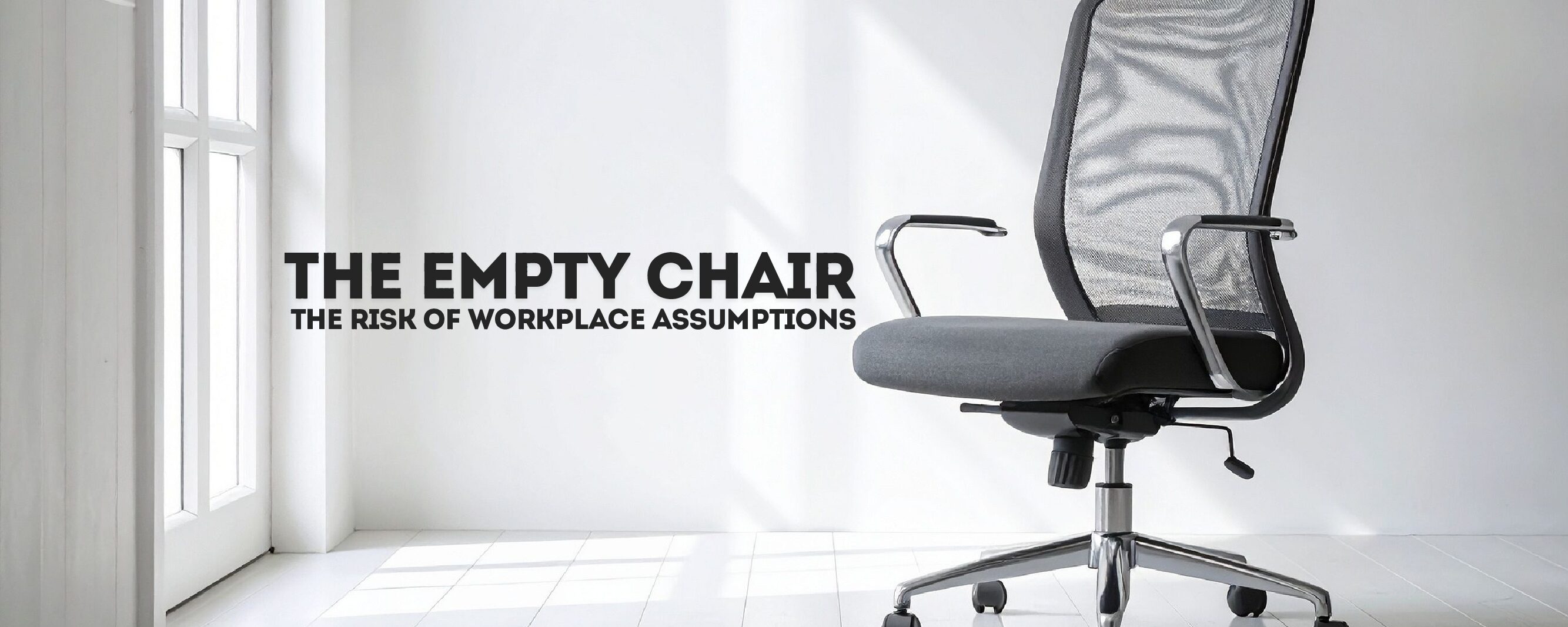
Every workplace has one: an empty chair. Most days, it means very little. Someone is on holiday, working from home, attending a meeting, or running a few minutes behind. We barely give it a second thought because our minds instinctively fill in the gaps. We assume everything is exactly as it should be. Most of the time we are right. But every so often, that empty chair tells a very different story.
How Quickly We Fill in the Blanks
Human nature doesn’t like uncertainty. When we don’t know the answer to something, our brains create one for us.
- The van hasn’t returned yet? The traffic must be heavy.
- Simon the engineer hasn’t checked in? The job is probably taking longer than expected.
- Bob the cleaner hasn’t answered his phone? He’s probably still elbow deep in that cleanup
- Rob the day manager hasn’t arrived? They’re probably in a meeting.
None of these assumptions are unreasonable. In fact, they’re perfectly normal. We make them every day without even realising it. It’s part of how we navigate life. The difficulty is that assumptions don’t tell us when they’re wrong.
The Workplace Routine
Most businesses run on familiar routines. People arrive at roughly the same time, make a coffee, greet colleagues, answer emails and get on with the day. When those routines change slightly, they rarely attract attention because everyone assumes there’s a perfectly ordinary explanation. During the summer months, however, routines often disappear altogether.
Annual leave creates quieter offices. Warehouses operate with smaller teams. Schools become almost empty. Managers and supervisors juggle unfamiliar responsibilities. Staff who usually spend their day surrounded by colleagues can suddenly find themselves opening buildings alone, locking up after everyone else has left, or covering duties they’ve never considered to be lone working.
Nothing dramatic has happened. The workplace has simply become quieter. Yet quieter workplaces often mean fewer people notice when something isn’t quite right
When Nobody Realises Someone Is Missing
Imagine Sally arrives early to unlock the premises before the rest of the team. While carrying some supplies to the other end of the building, she slips, falls and is knocked unconscious. Shortly after, her colleagues begin arriving…
- Tom assumes she is already on house calls.
- Alice thinks they’ve popped out to get the stationery they’re low on.
- Simon remembers someone mentioning yesterday that Sally’s child wasn’t feeling well. He assumes she’s working from home today.
Nobody is being careless. Nobody is ignoring them, quite the opposite. Everyone believes someone else already knows where they are. It’s a situation that develops quietly, simply because assumptions replace certainty.
Meanwhile, Sally has come around, but is dazed and unable to stand up!
The Difference Between Assuming and Knowing
There is a world of difference between believing someone is safe and knowing they are. Employers work hard to create supportive workplaces. They invest in training, wellbeing initiatives and health and safety procedures because they genuinely care about their staff. Yet one of the simplest questions can sometimes be overlooked.
If something happened today, how would anyone know?
That question isn’t designed to create fear. It’s designed to encourage certainty. Knowing someone has arrived safely, that they’ve completed a visit, they’ve finished locking up and made it back to their vehicle. Those moments of reassurance matter far more than many people realise.
The Empty Chair Isn’t Really About the Chair
The empty chair is simply a reminder. A reminder that people don’t always work where we expect them to. That routines change. That holidays, meetings, site visits and temporary cover all create situations where someone may be working alone without anyone consciously recognising it. Lone working isn’t limited to security staff or engineers. It could be the receptionist opening the office before everyone else arrives. The caretaker carrying out evening checks. The administrator staying behind to finish payroll. The shop supervisor closing up after a busy day. These people don’t usually think of themselves as lone workers. Often, neither does anyone else.
A Culture That Looks Beyond Assumptions
The strongest safety cultures aren’t built on expecting the worst to happen. They’re built on making simple habits part of everyday working life. Having a reliable check-in system. Knowing when someone has started work, when they’ve finished and giving them an easy way to raise the alarm if something isn’t right.
Employees notice when their wellbeing has been considered. They notice when someone has thought beyond the rota, the deadlines and the workload. They notice when their employer takes an interest in making sure they are safe. That reassurance builds trust in a way policies alone never can.
One Question Worth Asking
Tomorrow morning, when you walk into work, take a moment to look around. If you notice an empty chair, ask yourself one simple question. Do I know where that person is, or am I simply assuming? Most of the time, the answer will be reassuring. But on the rare occasion when it isn’t, that one question could make all the difference.
If you can make assumptions on an empty office chair you can see, now think about your remote workers, what assumptions you are making for your lone workers?
MyTeamSafe® an award-winning lone-worker App & proud supporter of the Suzy Lamplugh Trust. Contact us today about our FREE trial blog@myteamsafe.com